
 admin
admin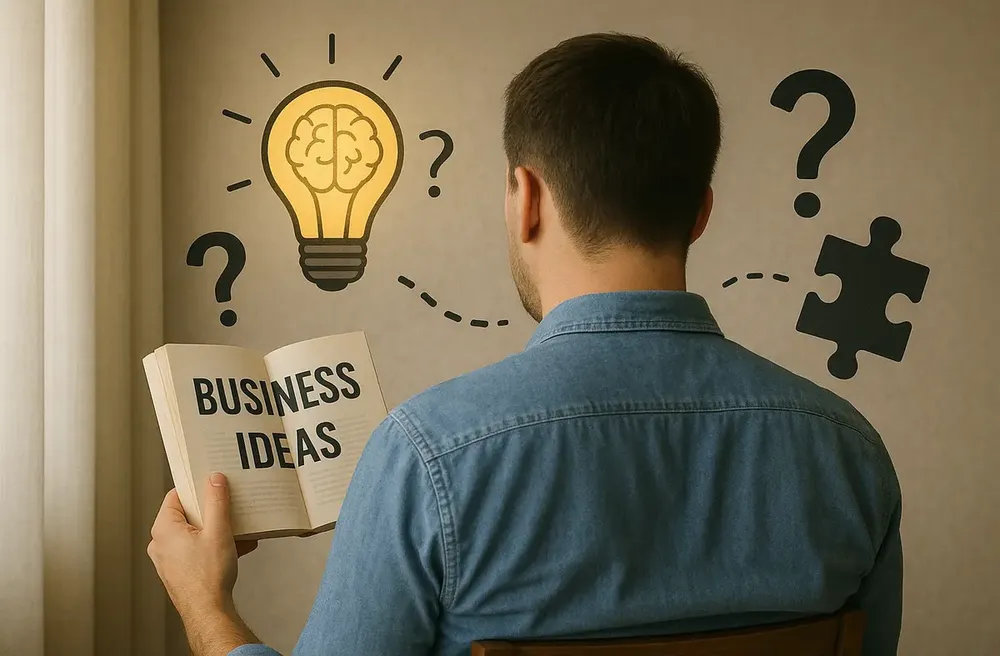
Every great startup begins with a simple question: ‘Why is this so frustrating?’ Discovering startup ideas from daily problems isn’t just smart—it’s one of the most proven paths to building scalable, meaningful businesses. Let’s dive into how you can turn everyday annoyances into innovation.
1. Understanding the Power of Everyday Frustrations in Discovering Startup Ideas from Daily Problems
Most billion-dollar startups didn’t emerge from futuristic labs or complex algorithms—they started with someone saying, ‘There has to be a better way.’ The journey of discovering startup ideas from daily problems begins by paying attention to what bugs you, your friends, or your community on a regular basis.
1.1. The Psychology Behind Problem Recognition
Human beings are wired to notice friction. When something interrupts our routine—like a long wait at the doctor’s office, a broken appliance, or a confusing app—we experience cognitive dissonance. This discomfort is a signal. According to behavioral economist Daniel Kahneman, people are more motivated to solve losses than to pursue gains—a concept known as loss aversion.
- Problems create emotional urgency, which fuels innovation.
- Repeated frustrations increase the likelihood of seeking a solution.
- Personal pain points often reflect broader market needs.
“The best startups solve personal frustrations. If you’re annoyed by something, chances are millions are too.” — Paul Graham, Y Combinator Co-Founder
1.2. From Annoyance to Opportunity: Real-World Examples
Some of the most successful companies began as personal fixes. Airbnb was born when its founders couldn’t afford rent and decided to rent out air mattresses during a conference. Uber emerged because Travis Kalanick was frustrated with hailing cabs in Paris. These weren’t abstract ideas—they were direct responses to real-life problems.
- Airbnb: No affordable lodging → Peer-to-peer home rentals.
- Slack: Chaotic internal communication → Unified team messaging platform.
- Canva: Design tools too complex for non-designers → Drag-and-drop graphic design.
These examples prove that discovering startup ideas from daily problems isn’t just possible—it’s a dominant pattern in startup success. For deeper insights, check out Y Combinator’s startup library, where founders frequently cite personal pain points as their origin story.
2. Training Yourself to Spot Problems Like a Founder
Not everyone sees problems the same way. Founders train themselves to be hyper-aware of inefficiencies. This skill isn’t innate—it’s cultivated through deliberate observation and reflection.
discovering startup ideas from daily problems – Discovering startup ideas from daily problems menjadi aspek penting yang dibahas di sini.
2.1. The Founder’s Mindset: Observing the Invisible
Most people accept daily inconveniences as ‘just how things are.’ Founders ask, ‘Why?’ They question norms. They notice patterns. They document friction. This mindset shift is crucial in discovering startup ideas from daily problems.
- Carry a problem journal (digital or physical) to log frustrations.
- Ask ‘What took too long today?’ or ‘What made me sigh?’ at the end of each day.
- Look for workarounds people create—these are clues to unmet needs.
For instance, if you see coworkers printing emails to sign them, that’s a sign of a broken workflow. If your parents struggle to video call you, that’s a UX problem waiting to be solved.
2.2. The ‘Five Whys’ Technique for Root Cause Analysis
Popularized by Toyota, the Five Whys method helps uncover the root cause of a problem. When you encounter a frustration, ask ‘Why?’ five times to drill down to its core.
- Problem: I missed my flight because of traffic.
- Why? Because I left late.
- Why? Because I didn’t know the best time to leave.
- Why? Because real-time traffic and flight data aren’t synced.
- Why? Because no app combines flight status with dynamic route planning.
Voilà—you’ve just identified a potential startup idea. This technique is widely used in product development and is taught in programs like IDEO U’s design thinking courses.
3. Validating the Problem Before Building a Solution
Not every frustration is worth solving. The key to successful discovering startup ideas from daily problems is validation. Just because you hate something doesn’t mean others do too.
3.1. The Problem-Solution Fit Framework
Before writing a single line of code, ask: Is this problem widespread? Is it painful enough? Is it frequent? These three criteria define a ‘good’ problem.
discovering startup ideas from daily problems – Discovering startup ideas from daily problems menjadi aspek penting yang dibahas di sini.
- Widespread: Affects a large number of people.
- Painful: Causes real cost (time, money, stress).
- Frequent: Happens regularly, not just once.
For example, ‘I hate folding laundry’ might be common, but it’s not painful or urgent enough for most people to pay for a solution. But ‘I can’t find a reliable plumber on weekends’ is both painful and frequent—making it a stronger candidate.
3.2. Conducting Problem Interviews
Talk to at least 20 people who experience the same issue. Don’t pitch your idea—just explore their experience. Ask open-ended questions:
- ‘Tell me about the last time this happened.’
- ‘How did you handle it?’
- ‘What did you wish existed?’
- ‘How much time/money did it cost you?’
These interviews reveal whether the problem is real and how people currently cope. Tools like SurveyMonkey or Typeform can help scale this research.
4. Turning Problems into Viable Business Ideas
Once you’ve validated a problem, the next step in discovering startup ideas from daily problems is crafting a solution that’s not only functional but also scalable and defensible.
4.1. From Pain Point to Product Concept
Start by defining the core value proposition: What will your solution do that current options don’t? Use the ‘Jobs to Be Done’ (JTBD) framework to clarify this.
- People don’t buy products—they ‘hire’ them to get a job done.
- Example: Someone doesn’t buy a drill—they hire it to make a hole.
- Ask: ‘What job is the customer trying to accomplish?’
If the job is ‘get a reliable home repair quickly,’ your solution might be a vetted, on-demand handyman platform with real-time tracking—like TaskRabbit or UrbanClap.
discovering startup ideas from daily problems – Discovering startup ideas from daily problems menjadi aspek penting yang dibahas di sini.
4.2. Assessing Market Viability and Competition
Even the best ideas fail if the market isn’t ready or is too crowded. Use tools like:
- Google Trends: Is interest in the problem growing?
- Crunchbase: Are similar startups getting funding?
- App Store/Google Play: Are there existing apps? How are their reviews?
If competitors exist, that’s a good sign—it validates the problem. But ask: Can you do it better, faster, or cheaper? For example, Zoom didn’t invent video conferencing, but it solved the pain of unreliable connections and complex setups.
5. Leveraging Technology to Solve Analog Problems
Many daily problems persist because they’re rooted in outdated systems. Discovering startup ideas from daily problems often means digitizing or automating analog processes.
5.1. Bridging the Digital-Physical Gap
Consider industries still reliant on paper, phone calls, or in-person visits—healthcare, real estate, legal services. These are ripe for disruption.
- Healthcare: Long wait times → Telemedicine platforms like Doctor On Demand.
- Real Estate: Inefficient viewings → Virtual tours and AI matchmaking.
- Legal: High fees for simple contracts → Automated legal docs via LegalZoom.
The key is to identify where human effort is wasted on repetitive tasks and replace it with smart automation.
5.2. Using AI and Automation to Scale Solutions
Today, AI can handle tasks once requiring human judgment. Chatbots can resolve customer service issues. Machine learning can predict maintenance needs. Natural language processing can summarize legal documents.
discovering startup ideas from daily problems – Discovering startup ideas from daily problems menjadi aspek penting yang dibahas di sini.
- Example: A landlord frustrated with tenant screening could use an AI tool that analyzes credit, employment, and rental history instantly.
- Another: A teacher spending hours grading quizzes could use an AI-powered grading assistant.
Platforms like OpenAI and Google Cloud AI make these tools accessible to startups.
6. Building a Minimum Viable Product (MVP) to Test Your Idea
Once you have a concept, build the simplest version possible. The goal isn’t perfection—it’s learning. This is a critical phase in discovering startup ideas from daily problems.
6.1. What Is an MVP and Why It Matters
An MVP (Minimum Viable Product) is a basic version of your product with just enough features to test the core value proposition. It allows you to gather user feedback without wasting time or money.
- Dropbox started with a video demo explaining its file-syncing idea.
- Zappos began by posting photos of shoes from local stores and fulfilling orders manually.
- Buffer launched with a landing page to gauge interest before writing any code.
These examples show that you don’t need a full product to validate demand.
6.2. Tools to Build an MVP Fast and Cheap
You don’t need to be a coder. No-code tools let you prototype quickly:
- Webflow or Wix: For landing pages and websites.
- Adalo or Thunkable: For mobile apps.
- Notion or Airtable: For internal workflows and databases.
- Zapier: To connect apps and automate processes.
For deeper technical guidance, visit Entrepreneur.com, which offers step-by-step MVP guides.
discovering startup ideas from daily problems – Discovering startup ideas from daily problems menjadi aspek penting yang dibahas di sini.
7. Scaling from a Personal Fix to a Global Business
The final stage of discovering startup ideas from daily problems is scaling. What started as a personal hack must evolve into a sustainable, scalable business.
7.1. From Solving Your Problem to Solving Others’
Your personal frustration was the spark. Now, you need to generalize it. Ask:
- Who else has this problem?
- What are their demographics, behaviors, and needs?
- How can we reach them cost-effectively?
Use customer segmentation to identify early adopters. For example, if you built a meal-planning app for busy parents, target parenting forums, Facebook groups, and Instagram influencers in the family niche.
7.2. Creating a Sustainable Business Model
A great product isn’t enough. You need a way to make money. Common models include:
- Subscription: Monthly fee for ongoing access (e.g., Canva Pro).
- Transaction Fee: Take a cut of each sale or service (e.g., Airbnb).
- Freemium: Free basic version, paid premium features.
- Advertising: Monetize user attention (e.g., YouTube).
Choose a model that aligns with user behavior and value delivery. For inspiration, study Business Model Generation by Alexander Osterwalder.
8. Case Studies: How Real Founders Discovered Startup Ideas from Daily Problems
Nothing beats real-world examples. Let’s look at how three founders turned personal pain into profit.
discovering startup ideas from daily problems – Discovering startup ideas from daily problems menjadi aspek penting yang dibahas di sini.
8.1. Brian Chesky and Airbnb: No Money, No Room, No Problem
In 2007, Brian Chesky and Joe Gebbia were struggling to pay rent in San Francisco. A design conference was coming to town, and hotels were booked. They bought air mattresses, created a simple website, and rented out their living room. That weekend, they made $200. The idea? Help people find affordable, short-term lodging. Today, Airbnb is worth billions.
“We didn’t set out to build a hotel company. We just needed to pay rent.” — Brian Chesky
8.2. Stewart Butterfield and Slack: A Side Project from a Failed Game
Butterfield was building a multiplayer game called Glitch. The game failed, but the team-chat tool they built internally was so good they pivoted. Slack solved the problem of scattered communication (email, IM, calls). It’s now a cornerstone of remote work.
8.3. Melanie Perkins and Canva: Too Many Design Tools, Too Much Complexity
While teaching design, Melanie noticed students struggled with Adobe’s complexity. She envisioned a simple, drag-and-drop tool for everyone. After 100+ rejections, Canva launched and is now a design powerhouse.
9. Common Pitfalls to Avoid When Discovering Startup Ideas from Daily Problems
Even with the best intentions, many fail. Here are the most common mistakes.
9.1. Solving a ‘Nice-to-Have’ Instead of a ‘Must-Have’
Many startups fail because they address minor inconveniences. Ask: Would users miss this if it disappeared? If not, it’s not a must-have.
- Example: A smart mug that keeps coffee warm is nice, but not essential.
- Contrast: A medical alert system for seniors is a must-have.
9.2. Falling in Love with the Solution, Not the Problem
Founders often become attached to their idea and ignore feedback. Stay problem-focused. Be willing to pivot.
discovering startup ideas from daily problems – Discovering startup ideas from daily problems menjadi aspek penting yang dibahas di sini.
“If you’re not embarrassed by the first version of your product, you’ve launched too late.” — Reid Hoffman, LinkedIn Co-Founder
10. Cultivating a Habit of Continuous Problem Discovery
Discovering startup ideas from daily problems isn’t a one-time event. It’s a lifelong practice.
10.1. Building a Problem-Solving Routine
Set aside 10 minutes daily to reflect:
- What frustrated me today?
- What workaround did I use?
- Who else experienced this?
- Could technology fix this?
Over time, this habit sharpens your founder instincts.
10.2. Engaging with Communities to Uncover Hidden Pain Points
Join online forums (Reddit, Quora, Facebook groups) and listen. People vent about problems freely. Look for recurring themes.
- Subreddits like r/Entrepreneur, r/startups, r/smallbusiness.
- Quora questions: ‘What are the biggest challenges in [industry]?’
- Product review sections: Users often mention missing features.
These are goldmines for discovering startup ideas from daily problems.
How do I know if my daily problem is worth solving?
discovering startup ideas from daily problems – Discovering startup ideas from daily problems menjadi aspek penting yang dibahas di sini.
Ask three questions: Is the problem widespread? Is it painful? Is it frequent? If you can answer ‘yes’ to all three, and people are already paying for imperfect solutions, it’s likely worth pursuing.
Can I build a startup without technical skills?
Absolutely. Many successful founders aren’t coders. Use no-code tools to build MVPs, and partner with technical co-founders or hire developers later. Focus on understanding the problem and customer needs first.
What if someone else is already solving this problem?
Competition validates the problem. Study existing solutions—where do they fall short? Can you offer better UX, lower cost, faster service, or a niche focus? Being second doesn’t mean failure; it means you can learn from others’ mistakes.
How do I protect my idea when validating it?
discovering startup ideas from daily problems – Discovering startup ideas from daily problems menjadi aspek penting yang dibahas di sini.
You don’t need a patent to start. Most ideas aren’t stolen—they’re hard to execute. Share your concept openly to get feedback. Execution, not secrecy, is what separates winners from losers.
Is discovering startup ideas from daily problems only for tech startups?
No. While tech enables scalability, the principle applies to any industry—food, fashion, education, services. The key is identifying a real pain point and delivering a better solution, whether digital or physical.
Discovering startup ideas from daily problems is more than a strategy—it’s a mindset. It’s about seeing the world not as it is, but as it could be. By paying attention to friction, validating pain points, and building solutions that truly help, you can turn minor annoyances into major innovations. The next billion-dollar idea might not come from a lab—it might come from your laundry room, your commute, or your inbox. Stay curious, stay observant, and start solving.
Further Reading: