
 admin
admin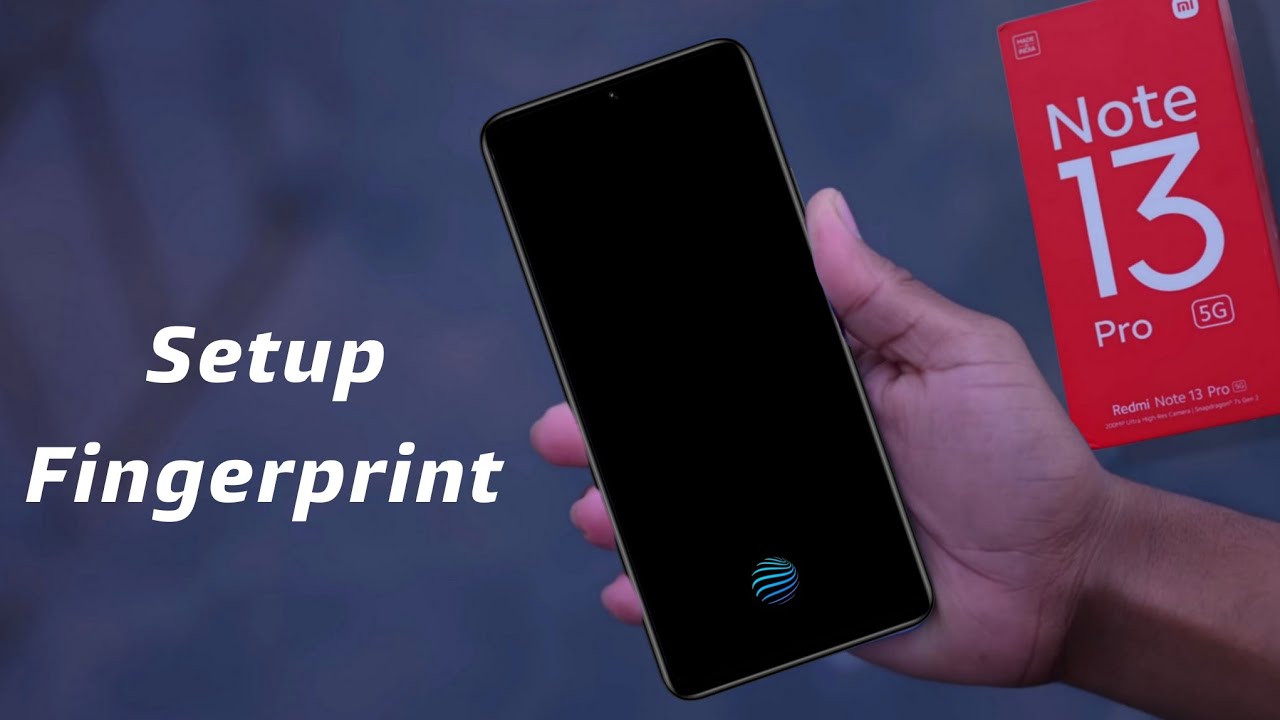
Ever wonder how your Xiaomi Redmi Note 13 Pro unlocks in a flash with just a touch? Let’s dive into the fascinating world of in-display fingerprint sensors and uncover exactly how this sleek, secure tech works under your fingertip.
How in-display fingerprint sensor technology works on Xiaomi Redmi Note 13 Pro: The Basics
The Xiaomi Redmi Note 13 Pro features an optical in-display fingerprint sensor, a cutting-edge technology that blends convenience with modern smartphone design. Unlike older capacitive sensors placed on the back or front bezel, this system embeds the scanner directly beneath the OLED screen, allowing for a seamless, full-screen experience. But how does it actually work?
What is an in-display fingerprint sensor?
An in-display fingerprint sensor is a biometric authentication system built under the smartphone’s screen. It captures your fingerprint data when you press your finger against the designated area on the display. This technology eliminates the need for physical buttons, contributing to sleeker, bezel-less designs.
How in-display fingerprint sensor technology works on Xiaomi Redmi Note 13 Pro – How in-display fingerprint sensor technology works on Xiaomi Redmi Note 13 Pro menjadi aspek penting yang dibahas di sini.
- It uses either optical or ultrasonic methods to read fingerprints.
- Optical sensors are more common in mid-range devices like the Redmi Note 13 Pro.
- The sensor activates only when needed, conserving battery life.
Types of in-display fingerprint sensors
There are two primary types of in-display fingerprint sensors used in modern smartphones: optical and ultrasonic. The Redmi Note 13 Pro uses the optical variant due to cost-efficiency and performance balance.
Optical Sensors: Use light to capture a 2D image of your fingerprint.A small LED beneath the screen illuminates the finger, and a photodetector captures the reflection pattern.Ultrasonic Sensors: Emit ultrasonic waves that map the 3D ridges and valleys of your fingerprint..
Found mostly in premium Samsung Galaxy devices, they’re more secure but costlier.”Optical in-display sensors have made biometric security accessible without compromising on design.” — TechRadar, techradar.com
How in-display fingerprint sensor technology works on Xiaomi Redmi Note 13 Pro: Optical Mechanism Explained
The Redmi Note 13 Pro leverages an optical in-display fingerprint sensor, which operates using light-based imaging.When you place your finger on the screen, the device springs into action, capturing a detailed image of your fingerprint almost instantly..
How in-display fingerprint sensor technology works on Xiaomi Redmi Note 13 Pro – How in-display fingerprint sensor technology works on Xiaomi Redmi Note 13 Pro menjadi aspek penting yang dibahas di sini.
Step-by-step process of optical scanning
Understanding the sequence of events during a fingerprint scan reveals the elegance of this technology:
Activation: When you wake the phone or attempt to unlock it, the system detects touch input on the screen.LED Illumination: The OLED pixels beneath your finger light up, acting as a flash to illuminate the ridges and valleys of your fingerprint.Image Capture: A photodiode sensor located under the display captures the reflected light pattern, creating a 2D image of your fingerprint.Pattern Matching: The captured image is compared to the stored template in the phone’s secure enclave.
.Authentication: If the match is confirmed, the device unlocks.Role of OLED in enabling optical sensors
One critical requirement for optical in-display sensors is the use of OLED (Organic Light-Emitting Diode) displays.Unlike LCDs, OLED screens can turn individual pixels on and off, allowing light to pass through specific areas when needed..
How in-display fingerprint sensor technology works on Xiaomi Redmi Note 13 Pro – How in-display fingerprint sensor technology works on Xiaomi Redmi Note 13 Pro menjadi aspek penting yang dibahas di sini.
- OLED panels are self-emissive, meaning each pixel produces its own light—essential for illuminating the fingerprint.
- LCDs require a backlight, which blocks the sensor’s ability to capture clear images from beneath.
- Xiaomi chose OLED for the Redmi Note 13 Pro specifically to support this advanced biometric feature.
How in-display fingerprint sensor technology works on Xiaomi Redmi Note 13 Pro: Hardware Components
Beneath the sleek glass of the Redmi Note 13 Pro lies a sophisticated arrangement of hardware components that make in-display fingerprint recognition possible. These parts work in harmony to deliver fast and reliable unlocking.
Main sensor module and placement
The optical fingerprint sensor in the Redmi Note 13 Pro is typically a small CMOS image sensor mounted directly under the display. It’s positioned in the lower half of the screen, where users naturally rest their thumb when holding the phone.
- Manufactured by companies like Goodix or FPC (Fingerprint Cards AB).
- Integrated during assembly, requiring precise alignment with the display layer.
- Protected by multiple layers of glass and adhesive to prevent damage.
Integration with the display and motherboard
The sensor doesn’t operate in isolation. It’s deeply integrated with both the display driver and the phone’s main processor.
How in-display fingerprint sensor technology works on Xiaomi Redmi Note 13 Pro – How in-display fingerprint sensor technology works on Xiaomi Redmi Note 13 Pro menjadi aspek penting yang dibahas di sini.
- Communicates via I2C or SPI protocols with the system-on-chip (SoC).
- Relies on the MediaTek Dimensity 7200-Ultra processor in the Redmi Note 13 Pro for secure data processing.
- Data is encrypted and stored in a Trusted Execution Environment (TEE) to prevent unauthorized access.
How in-display fingerprint sensor technology works on Xiaomi Redmi Note 13 Pro: Software and Security
While hardware captures the fingerprint, software ensures accuracy, speed, and most importantly, security. Xiaomi employs a multi-layered approach to protect user data and enhance usability.
Fingerprint data encryption and storage
Your fingerprint isn’t stored as a photo. Instead, the system converts it into a mathematical representation—a template—that cannot be reverse-engineered.
- Data is encrypted using AES-256 or similar standards.
- Stored in a secure hardware enclave, inaccessible to apps or even the operating system.
- Xiaomi does not upload fingerprint data to cloud servers.
MIUI optimization for faster recognition
Xiaomi’s MIUI software includes intelligent algorithms that learn from your usage patterns to improve unlock speed and accuracy.
How in-display fingerprint sensor technology works on Xiaomi Redmi Note 13 Pro – How in-display fingerprint sensor technology works on Xiaomi Redmi Note 13 Pro menjadi aspek penting yang dibahas di sini.
- Adaptive learning adjusts to slight variations in finger placement over time.
- Wet finger detection mode enhances usability in humid conditions.
- Anti-spoofing measures prevent fake fingerprints made from photos or molds.
“MIUI’s biometric engine has significantly reduced false rejection rates in recent Redmi models.” — GSMArena, gsmarena.com
Performance and User Experience on the Redmi Note 13 Pro
The real test of any technology lies in daily use. The in-display fingerprint sensor on the Redmi Note 13 Pro delivers a responsive and intuitive experience, though it comes with some trade-offs.
Unlock speed and accuracy
Thanks to the high-refresh OLED panel and optimized firmware, the sensor unlocks the phone in approximately 0.3 to 0.5 seconds under ideal conditions.
- Faster than previous generations of Redmi devices.
- Accuracy improves after registering multiple angles of the same finger.
- May slow down slightly with wet or cold fingers.
Common issues and troubleshooting
While generally reliable, users may encounter occasional hiccups:
How in-display fingerprint sensor technology works on Xiaomi Redmi Note 13 Pro – How in-display fingerprint sensor technology works on Xiaomi Redmi Note 13 Pro menjadi aspek penting yang dibahas di sini.
- Sensor not responding: Clean the screen and ensure no screen protector is interfering.
- False rejections: Re-register your fingerprint in optimal lighting and dry conditions.
- Ghost touches: Disable ‘Lift to Wake’ if accidental triggers occur.
How in-display fingerprint sensor technology works on Xiaomi Redmi Note 13 Pro: Advantages Over Traditional Sensors
The shift from rear-mounted or front capacitive sensors to in-display solutions marks a significant evolution in smartphone design and functionality.
Design and aesthetics
By embedding the sensor under the screen, Xiaomi achieves a cleaner, uninterrupted front panel.
- Enables true edge-to-edge displays.
- Removes the need for physical buttons that can wear out.
- Improves symmetry and visual appeal.
Enhanced security compared to face unlock
While face unlock is convenient, it’s generally less secure than fingerprint authentication.
How in-display fingerprint sensor technology works on Xiaomi Redmi Note 13 Pro – How in-display fingerprint sensor technology works on Xiaomi Redmi Note 13 Pro menjadi aspek penting yang dibahas di sini.
- Fingerprint sensors are harder to spoof than facial recognition in low-end devices.
- Works reliably in dark environments where face unlock fails.
- Less prone to being tricked by photos or masks.
Future of In-Display Sensors and Xiaomi’s Roadmap
Xiaomi continues to invest in biometric innovation, and the Redmi Note 13 Pro is just one step in a broader strategy to bring premium features to affordable devices.
Potential for ultrasonic sensors in future Redmi models
While the current model uses optical tech, Xiaomi has experimented with ultrasonic sensors in higher-end Mi and POCO devices.
- Ultrasonic sensors offer 3D mapping, better moisture resistance, and higher accuracy.
- Cost remains a barrier for mass adoption in budget lines.
- Expected to appear in Redmi flagships within the next 2–3 years.
Integration with under-screen cameras and AI
As Xiaomi pushes toward fully invisible front cameras and smarter AI, the fingerprint sensor will play a role in holistic biometric systems.
How in-display fingerprint sensor technology works on Xiaomi Redmi Note 13 Pro – How in-display fingerprint sensor technology works on Xiaomi Redmi Note 13 Pro menjadi aspek penting yang dibahas di sini.
- Future sensors may support vein pattern recognition.
- Potential for health monitoring via blood flow analysis (still in research phase).
- AI could predict user intent, activating the sensor preemptively.
“The next generation of in-display sensors will go beyond unlocking—they’ll understand you.” — The Verge, theverge.com
How does the in-display fingerprint sensor work on the Xiaomi Redmi Note 13 Pro?
The Redmi Note 13 Pro uses an optical in-display fingerprint sensor. When you touch the screen, OLED pixels light up your finger, and a sensor underneath captures the reflection to create a 2D image of your fingerprint. This image is then matched against the stored template to unlock the phone securely.
Is the in-display fingerprint sensor on the Redmi Note 13 Pro secure?
How in-display fingerprint sensor technology works on Xiaomi Redmi Note 13 Pro – How in-display fingerprint sensor technology works on Xiaomi Redmi Note 13 Pro menjadi aspek penting yang dibahas di sini.
Yes, the fingerprint data is encrypted and stored in a secure hardware enclave (Trusted Execution Environment). It’s not accessible to apps or cloud services, making it highly secure for daily use.
Why doesn’t my fingerprint sensor work sometimes?
Common causes include dirt on the screen, thick screen protectors, wet fingers, or software glitches. Cleaning the screen, re-registering your fingerprint, or restarting the phone usually resolves the issue.
How in-display fingerprint sensor technology works on Xiaomi Redmi Note 13 Pro – How in-display fingerprint sensor technology works on Xiaomi Redmi Note 13 Pro menjadi aspek penting yang dibahas di sini.
Can I use the fingerprint sensor with a screen protector?
Yes, but only with thin, high-quality tempered glass or film protectors designed for in-display sensors. Thick or low-quality protectors can block light and reduce sensitivity.
Will Xiaomi switch to ultrasonic sensors in future Redmi phones?
How in-display fingerprint sensor technology works on Xiaomi Redmi Note 13 Pro – How in-display fingerprint sensor technology works on Xiaomi Redmi Note 13 Pro menjadi aspek penting yang dibahas di sini.
While not confirmed, Xiaomi is actively researching ultrasonic technology. Given its advantages in accuracy and durability, it’s likely to appear in higher-tier Redmi models in the coming years.
The in-display fingerprint sensor in the Xiaomi Redmi Note 13 Pro is a perfect blend of innovation, design, and practicality. By leveraging optical technology and OLED display synergy, Xiaomi delivers a fast, secure, and aesthetically pleasing unlocking experience. While it may not match the precision of ultrasonic sensors in flagship devices, it sets a strong benchmark for mid-range smartphones. As Xiaomi continues to refine this technology, we can expect even faster, smarter, and more secure biometric systems in future Redmi models—bringing premium features to more users around the world.
How in-display fingerprint sensor technology works on Xiaomi Redmi Note 13 Pro – How in-display fingerprint sensor technology works on Xiaomi Redmi Note 13 Pro menjadi aspek penting yang dibahas di sini.
Further Reading: